



Key Tips for Practice Casino Games
When you first you arrive at a platform like Goldzino Casino, the array of blinking thumbnails and dense rule sets can be a lot to process https://goldzinobelgium.com/. Through thorough hands-on testing, we’ve found that the best starting point is invariably free-to-play or demo mode. Still, many players overlook this training ground altogether. Leaping straight into real-money spins without a risk-free practice run typically depletes your bankroll fast and makes you frustrated. We don’t see demos as toys. We treat them as simulators where you can analyze volatility, assess RNG fairness, and understand paytable mechanics without the mental weight of losing cash. If you apply the same critical focus you’d employ at a high-stakes live table, a free slot spin turns into a crash course in probability. The best players we observe do not divide “real” from “free” by attention level; they differentiate them only by the lack of risk. That mindset is what turns every free session on the lobby floor into something truly valuable.
Honing Responsible Gaming Habits
We are certain that free-to-play environments are the least utilized tools for building what we call “financial breathing room.” Instead of treating demos as just games, we convert them into active simulators for deposit cool-off periods. When the urge to chase a loss hits, switching quickly to a demo tab enables the neural craving for action to engage without draining your wallet. We’ve tested this “practice chase” idea a lot. Loading a high-risk free slot right after a painful real-money loss, the ritual of clicking “spin” satisfies the procedural loop long enough for the prefrontal cortex to regain control from the midbrain’s dopamine demand. This isn’t passive distraction; it’s a deliberate substitution tactic. We also use free modes to pre-test our loss-limit pain thresholds. We simulate a specific deposit amount and force a stop at a hard floor, physically stepping away when that virtual limit triggers. Training yourself to walk away at a threshold, even with no real money lost, strengthens self-exclusion reflexes for the moments that count.
Employing Practice Modes to Pressure-Test Reality Checks
Session time vanishes fast during high-engagement play. That’s why we use free environments to fine-tune our internal clocks and test how reality-check reminders feel. In a demo, we turn off visual timers and rely only on gut timekeeping, then compare it against the platform’s session clock. What we usually find is a huge underestimation: a feeling of 15 minutes often means 45 minutes or more have actually passed. Free-play modes at modern sites have the same interface pace and auto-spin cadence as paid versions, so the time-dilation effect is identical. By running timed drills with a 10-minute alarm in demo, we train ourselves to handle interruptions without irritation. That makes it much easier to accept a live-session reality check and request a statement without emotional pushback. Without money distracting you, demo play sharpens the mechanical habit of checking your balance and clock often, a habit that directly preserves your bankroll discipline in high-stakes real-money settings.
Closing the Divide from Demo to Real-Money Dominance
Shifting from a managed demo environment to a real-money seat demands a strict system of parametrical transfer, not just a mental gear shift. We create what we call “bridge metrics”: three non-negotiable rules we verify in free play before betting a single chip. To begin, a confirmed baseline hit rate expectation. We only switch to real cash if the demo session demonstrated a hit rate in our comfort zone over a numerically meaningful sample. Second, a mechanics comprehension test. We quiz ourselves on the bonus-tier rules so we are not caught off guard when a locked wild mechanic suddenly shifts a payline. Finally, a volatility synchronization check, where our projected deposit size logically lines up with the cold-streak duration we recorded in practice. The most profitable players we’ve followed never treat the demo as a toy. They utilize it like a flight simulator, accumulating hours in the cockpit before bringing passengers up. Adhere to that functional standard, and the shift to wagering real money becomes just a shift in data logging, not a step into the unknown.
Reading Paytables In the Style of a Professional Analyst
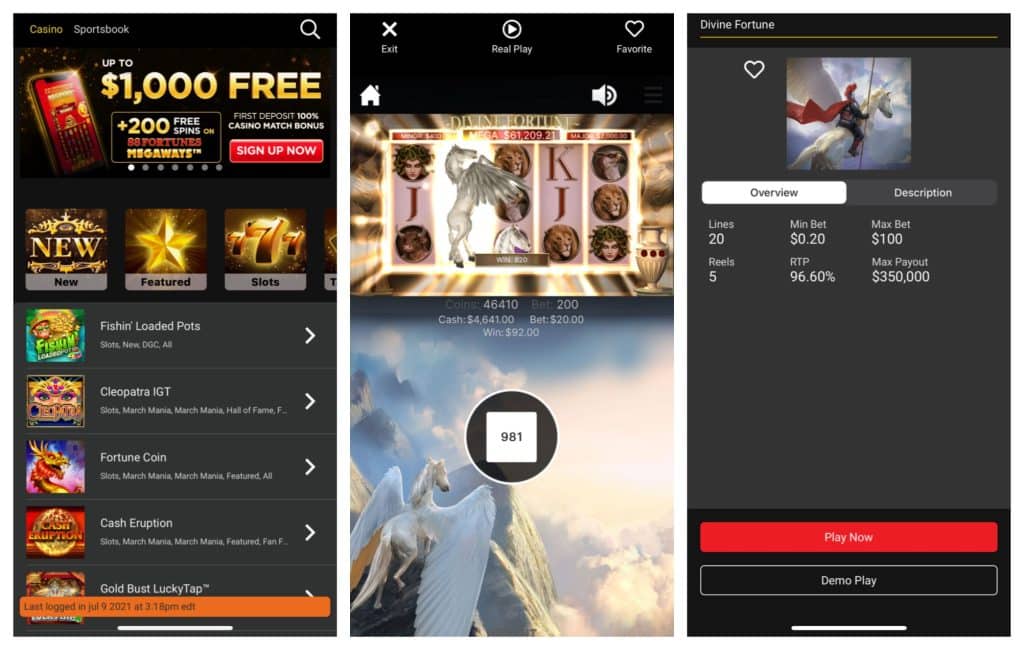
A paytable is more than a list of symbol values. It’s a code that uncovers a game’s mathematical bias when you know what to examine. In free-play mode, you can pause and analyze every footnote, multiplier rule, and scatter mechanic without time pressure. We start by spotting the highest-paying standard symbol and tracking its frequency, then dig into the fine print on wild substitutions. Some slots boast huge jackpots but bury a clause that max payouts only activate on certain bet multipliers or bonus buys. When we scrutinize these rules in demos, we often notice that a “high volatility” warning goes hand in hand with a steep drop in line-hit frequency during base gameplay. Understanding this before you deposit guarantees you won’t miscalculate a slot with 20,000x potential that mathematically demands a bankroll big enough to withstand a 15,000x loss before the variance turns. We handle the demo session as a due diligence audit. Here’s a list we run through for every paytable review:
- Identify the top-paying standard symbol and its required cluster or line threshold.
- Check whether wild symbols substitute for scatters or only for standard pay symbols.
- Identify any capped win clauses or maximum payout multipliers buried in the fine print.
- Verify if the bonus round triggers organically or demands a specific bet multiplier tier.
- Observe any difference between advertised jackpot figures and the real coin values.
Detecting Hidden Volatility Through Extended Simulations
Volatility ratings on the tin are useful marketing, but they hardly ever tell the unvarnished truth about how a game delivers its payback. In our practical reviews, we rely on free-play modes to gather real data on hit frequency, the share of spins that produce a win relative to your stake. We start with a grid of 100-spin sample sets and note whether wins concentrate in the micro-stakes range or if the base game is largely dead air intended to channel you toward a bonus buy. Many modern Megaways or cluster-pay slots present a misleading average return because the math model depends on a single monster bonus round every 500 to 800 spins. In a paid session, you might go broke attempting to attain that feature. In demo mode, you can securely watch the grueling stretches of dead spins without flinching. We advise running at least two separate trial sessions at different virtual bet levels to see if the randomizer shifts its seed behavior. That gives you a clear view of the engine behind the lights.
Comparative Analysis: Desktop Compared to Mobile Demo Efficiency
We pay close attention to how well a game performs, and free games give us the perfect environment to evaluate cross-platform performance. We examine a single slot, like a visually demanding cascade title, in parallel on desktop browser and mobile touch screen in demo mode. We monitor frame rate drops, certainly, but also for UI layout shifts that could compromise bet-sizing accuracy. On a limited mobile screen with touch controls, the “max bet” button can be a danger that real-money players fat-thumb. In demo mode, we can thoroughly test that danger zone without financial consequences. We also check RNG continuity across devices. The math ought to stay the same, but we ensure that loading heavy HTML5 assets doesn’t freeze the screen during a important bonus gamble feature. This risk-free QA process, which we frequently conduct at Goldzino Casino, means that when we do commit real money on mobile, we’re playing on a layout we’ve already memorized with our thumbs. That eliminates muscle-memory errors that could silently eat away at the bankroll through accidental misclicks.
Perfecting Table Game Approaches Without Ego
A no-cost digital blackjack or roulette table removes ego fully. You may make the statistically correct play without concern about seeming unwise. We use demo blackjack to practice perfect basic strategy until it’s instinctive, shutting off the “feel” of the game and focusing only on the hard-total logic charts. In free mode, doubling down on soft 18 against a dealer’s 3 turns into a dry academic habit, rather than a nerve-wracking risk. For baccarat and roulette, we conduct long sequence-tracking exercises to eliminate the gambler’s fallacy completely. Viewing a virtual wheel land red 12 times in a row without forfeiting a cent shows the reality of independent events more clearly than any book. What we enjoy about the table games included in the wider catalog at Goldzino Casino is the reaction speed. Honing rapid-fire decisions against a fast demo dealer conditions your reflexes for the real-money lobby, with zero financial trauma required.
The Skill of Advanced Multi-Hand Training
Going beyond single-hand play, we use multi-hand or multi-seat free tables to ramp up the cognitive load in a safe space. Playing three blackjack hands at once requires you to switch from a linear decision path to a triage system, choosing which hand needs immediate math correction. We extend this to five hands in free demos, a volume that would be reckless with real money but serves as a great accelerator for pattern recognition. The point isn’t about to mimic profit-seeking. We’re pinpointing our own weak spots under information overload. We measure ourselves, confirming if the correct surrender or split decision stays instinctual when the interface speeds up. With zero money on the line, we may test controversial moves, like standing on a stiff total against a strong upcard, simply to observe how often those non-textbook plays truly perform over a 500-hand sample. This type of intensive screen time carves optimal strategy deep into procedural memory.
The Study of Gambling Risk-Free
Fear of loss is a cognitive bias that affects your thinking when genuine funds is at stake. In a no-risk environment, you can break a game down to its mathematics without the adrenaline spikes that trigger chasing. We’ve discovered that demo modes let you evaluate your discipline: spin a slot through 200 or 300 spins and observe clearly how it behaves during a extended cold streak. Without the worry of hitting zero, your brain interprets negative variance analytically, not emotionally. We suggest setting rigid pretend budgets even with virtual credits. If you wouldn’t bump your bet in a actual money session, avoid doing it in demo mode. That develops muscle memory for bankroll management and converts discipline from a conscious effort into a habit. Goldzino Casino’s interface makes transitioning between demo and live play seamless, which promotes this kind of behavioral conditioning better than many competitors that conceal free modes behind registration walls.
Group and Cooperative Education in Free Lobbies
Solo grinding hones skill, but mutual observation in no-cost settings enhances strategic learning. We favor a practice method where two analytical minds watch the same demo screen and discuss the probabilistic weight of a hold-and-respin feature in real time. This peer review halts individual confirmation bias from taking root. One player might claim a slot is “hot,” while the other monitors the raw tally that proves underperformance. We employ free table games to orally test complex strategy deviations, discussing a European Roulette neighbor bet coverage before the virtual ball lands. These collaborative sessions cost nothing but significantly accelerate how fast you grasp complex playbooks. Social casino features and chat, even during demo play, offer a stream of crowd-sourced intelligence, though we sift that chatter carefully, sifting for raw mechanical intel over user superstition. Observing other avatars play a free game sometimes reveals inventive betting progressions a solo reviewer would never consider, widening our tactical repertoire before we commit real money to the live version of the same title.
Decoding Bonus Mechanics and Betting Controls
Free-play games are our workshop for analyzing the “bonus buy” economy without wasting cash. These acquisition features, often pricing at 50x to 100x the base bet, offer instant entry to free spins, but the volatility inside those bought rounds is rarely uniform. In demo mode, we trigger the same feature five or ten times in a row and track the payback percentage. We often observe a huge difference between the best-case teaser and the disappointing median return, which lies well below the buy-in cost. That information, impossible to obtain quickly with real money, shows you if a slot is a high-stakes shortcut or a mathematical trap. At the same time, we measure how often organic bonus rounds activate. Using an auto-spin counter in demo mode, we can see if a game marketed as having “frequent” features actually provides them once in a blue moon. This kind of analysis cuts through marketing hype and enables us choose titles whose bonus rhythm matches our risk appetite before we ever use our deposit.
Prolonged Evolution Tactics Utilizing Demo Updates
Game releases aren’t static. Providers often roll out server-side patches that modify math models slightly even after launch, and we leverage free games as an early detection system. Whenever a known slot receives a visual facelift or a ruleset update, we jump back into the demo version to perform a comparison sweep. We examine if the scatter distribution or free-spin retrigger difficulty has been subtly modified. By maintaining historical logs of our past demo performance on version 1.0, we can spot a 0.5% shift in feature frequency that casual players might fail to notice. This ongoing auditing ensures our real-money strategy never depends on outdated intel. The free lobby also lets us to assess newly added titles fast without eating into our session time. We set aside a particular “scouting hour” each month, strictly in demo mode, to rapid-fire test every new release and select the top two percent that satisfy our strict volatility-to-entertainment criteria. This cycle of uninterrupted, risk-free due diligence is a central part of keeping a sharp edge over the house’s continually changing game library.
Employing Free Spins as Learning Capital
We never judge promotional free spins just by their cash value. We view them as educational capital and data-mining tickets. When we receive a batch of no-deposit spins or demo credits on a new title, we avoid the temptation to spin blindly and hope. Instead, we document the reel-strip composition by tracking symbol frequency during the free session. Since we don’t pay for the spins, we can focus purely on the output data. We carefully observe how a game handles “scatter teasers”: those near-miss bonus triggers that show two out of three required scatters. Monitoring these near-misses across 50 free spins reveals the psychological manipulation baked into the slot’s visual feedback loops. This objective, academic approach turns a giveaway into a private seminar on engine architecture. Studying how a provider structures near-miss signals in a risk-free trial enables us to pick apart the illusion of “almost winning,” a cognitive trigger we stay clinically vigilant against when we switch to funded real-money play.
Developing Your Pattern Recognition Without Any Risk
For participants who favor live dealer stats, free-play versions of game shows or automated roulette provide a canvas for advanced pattern discrimination training. We fully recognize that each spin is independent, but we utilize these free demo streams to sharpen our visual speed at reading board history and derivative roadmaps. We can work on “card counting lite” techniques in free digital blackjack where penetration is simulated, holding a running count in a distraction-free space until the tally becomes a mental reflex, not a chore. This isn’t about ensuring a win against a non-linear shuffle. It’s about packing more math processing into your session without the anxiety of a dealer deadline. We also utilize free demos of video poker variants like Jacks or Better or Deuces Wild to perfect our draw/discard decisions. Learning the tricky exceptions, like holding a suited ten over a single high card, takes hundreds of instant drills. The free-play format operates like a perfect flash-card system, enabling our analytical mindset grind the optimal strategy to a near-100% return expectation before we risk a single unit in the paid lobby.
Assessing the Supplier’s Software Integrity
Underneath the aesthetics and imagery is the binary soundness of the software, a factor we probe hard during free-play. We check if the game client functions like a genuine client-side randomizer or if it retrieves server-seeded results with a dubious delay. In demo mode, a slight lag in spin completion, often concealed by flashy effects, can at times suggest a stringent server-verification process. That’s actually a positive fairness sign, but it’s a variable we need to understand before gambling live. We also assess how well a game deals with a disconnection during a bonus round. Rebooting a demo client after forcing a mid-feature termination reveals whether the engine saves the state precisely, a vital trust element. We also match the theoretical RTP displayed in the help files with our observed simulation data to assess transparency. Our faith in an operator increases when the demo GUI matches the paid GUI pixel for pixel, with no mysterious “demo mode only” modifications in reel behavior that might suggest a manipulated trial environment meant to deceive our live expectations.